
DENTAL FILLINGS IN POWAY, CA
Dental Fillings
Restoring Teeth With Dental Fillings
If you’re looking for exceptional dental filling services near you, your search ends here! Pomerado Family Dental is committed to providing top-tier dental filling procedures at our Poway, CA, location near Ramona, Rancho Bernardo, Scripps Ranch, 4S Ranch, and Mira Mesa.
Because tooth decay, also known as dental caries, remains one of the most prevalent chronic diseases affecting both children and adults worldwide, procedures to place fillings are routinely performed each and every day.
At the office of Pomerado Family Dental, we provide precise and gentle treatment and maintain a position at the forefront of advances in care to provide patients with the highest quality of aesthetically pleasing and durable dental fillings.
The History Of Dental Fillings
According to archaeological findings, for as long as dental problems have existed, there have been efforts to provide emergency and restorative care. In fact, attempts to place dental fillings have been found in the skeletal remains of people who lived around the year 8000 BC. However, it wasn’t until thousands and thousands of years later, in the 19th century, that a variety of metal fillings, including dental amalgam, appeared on the scene. Although gold achieved status as a popular restorative material, it was soon apparent that amalgam fillings, consisting of a mixture of mercury and an alloy composed of silver, tin, and copper, offered a less expensive, durable, and simpler alternative.
Our Commitment To Restoring Oral Health And Beautiful Smiles
At the office of Pomerado Family Dental, we tailor treatment to address specific dental needs and expectations of care. As with all the services our practice provides, we’ll explain all your options in care, including the type of dental filling materials we offer to restore your tooth. Our goals are to gently remove the dental decay and the damaged tooth structure and then rebuild your tooth’s form and function while providing you healthy, durable, long-lasting, and cosmetically pleasing results.


What are the different types of dental fillings?
While traditional dental materials like gold and amalgam have been in use for over a century, recent advances in dental technology have made a more expansive and improved selection of restorative choices widely available. Beyond offering strength and durability, these new filling materials provide aesthetically pleasing and natural-looking results.
Composite Fillings
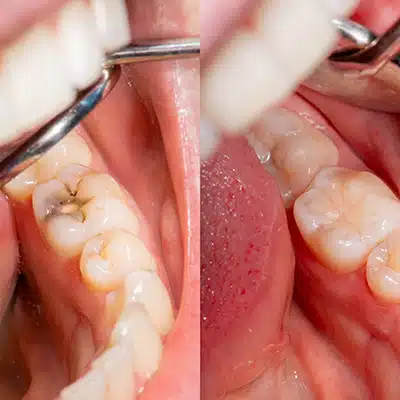
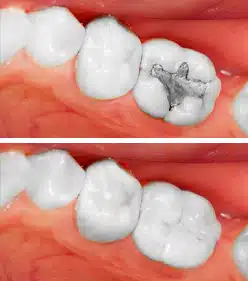
Composite fillings, which are frequently referred to as either “tooth-colored fillings” or “white fillings,” consist of a combination of biocompatible resins and finely ground, glass-like filler materials that become strong and durable when set. Available in a complete range of natural-looking shades, composite fillings offer a cosmetically pleasing alternative to traditional “silver” fillings. Composite resins are also used in dental bonding procedures to improve a tooth’s color or shape, mask defects, or close minor gaps between teeth.
Composite fillings adhere to natural tooth structure through a bonding process, which also serves to seal and strengthen the tooth. Beyond providing a close match to your natural tooth color, a composite filling does not require removal of as much tooth structure for placement, nor are they subject to expansion or contraction with temperature changes as is the case with dental amalgams. However, composite restorations can be more vulnerable to wear and staining and may require replacement down the road.
Silver Fillings (Amalgam)
For many years, amalgam fillings represented the standard of care for restoring decayed teeth. While they don’t offer the cosmetic appeal of other types of filling materials, amalgam restorations are strong, durable, and less likely than some other types of fillings to break or wear down.
Glass Ionomers
Another type of white filling material, glass ionomer cements bond to the tooth’s surface to provide a tight seal between the tooth and surrounding oral environment. Besides offering a natural-looking restoration, glass ionomer cements slowly release fluoride to strengthen and help protect the involved tooth from future decay. Since they are not as durable or wear-resistant as other filling materials, glass ionomers are most frequently used to treat baby teeth, cavities near the gum line, and temporary fillings.


Ceramic Fillings
Ceramic fillings, inlays, and onlays are fabricated from high-quality dental porcelain and ceramics. As one of the most stain- and wear-resistant options in tooth-colored restorations, they offer durable, attractive, and long-lasting results. While “direct” fillings such as dental amalgam and composite fillings are placed immediately after the tooth is prepared, “indirect” restorations such as inlays and onlays are fabricated outside of the mouth before being bonded into place. For teeth that require more extensive restoration, we may recommend a CEREC® same-day crown, which can be digitally designed, created, and placed in our Poway office in a single visit.
Gold Fillings
How Are Cavities Treated?
Once our office has a chance to assess your smile, we’ll advise you of our findings and outline a comprehensive treatment plan to help ensure your smile is healthy and functions at its best. If any tooth decay is detected, we’ll schedule appointments to treat those cavities and place the fillings or restorations that are needed.
At the office of Pomerado Family Dental, patient care and comfort are our top priorities. While treating cavities and placing fillings are among the most routine procedures in dentistry, our office understands you have questions and concerns and will keep you well-informed every step of the way.


For patients who are anxious about dental work, you can rest assured the office of Pomerado Family Dental is mindful of your needs. As skilled and experienced providers of care, we pride ourselves on providing gentle dentistry and do all we can to make your visit comfortable and stress-free. While we perform dental procedures under local anesthesia, we’re also happy to discuss options in dental sedation.
What Do I Need To Know Following The Placement Of My New Filling?
At the office of Pomerado Family Dental, our goal is to help our patients enjoy optimal oral health and to keep them well-informed every step of the way.
Until the anesthesia wears off
Immediately following your dental visit, you may experience a period of lingering numbness. Normal sensation typically returns within an hour or two. However, until the anesthetic has completely worn off, it’s essential to protect yourself from unintentionally biting or injuring your lips, cheeks, gums, or tongue. Be mindful of chewing, drinking hot beverages, or smoking.
Now that your tooth has been restored and rebuilt, it may feel slightly different


You may experience short-term sensitivity
It’s perfectly normal for a tooth to feel a little sensitive following the placement of a filling. You may experience a twinge when eating cold or hot foods and beverages. This sensitivity should subside by itself within a few days. If your sensitivity worsens, you experience ongoing pain or develop any other symptoms; please contact our office.
Caring for your new restoration
Frequently Asked Questions
At Pomerado Family Dental in Poway, a dental filling is used to restore a tooth damaged by decay, small fractures, or enamel wear. We proudly care for patients in Poway as well as nearby communities like Rancho Bernardo, Scripps Ranch, and 4S Ranch. Treating cavities early helps preserve natural tooth structure and prevent the need for more extensive restorative procedures.
Most patients in Poway and surrounding areas are surprised at how comfortable fillings are. We use local anesthesia to keep the procedure gentle and efficient. If you feel anxious about treatment, we also offer comfort-focused options through our sedation dentistry services.
Tooth-colored fillings typically last 5–15 years, depending on size, location, and oral habits. Regular checkups and cleanings help extend their lifespan and allow us to monitor wear before it becomes a bigger issue.
For most patients at our Poway office, composite (tooth-colored) fillings are the preferred option because they blend naturally with your smile. In some cases, alternative restorations may be recommended as part of our broader restorative dental services, depending on the strength needed.
Some practices focus only on specialty treatments or refer restorative work elsewhere. At Pomerado Family Dental, we provide comprehensive care — including fillings — so patients from Rancho Bernardo, 4S Ranch, and nearby communities can receive complete treatment in one location.
Yes. If sensitivity is caused by decay or enamel breakdown, a filling can seal and protect the tooth. If symptoms persist, we may use advanced imaging through our digital radiography services to determine the underlying cause.
If a filling breaks or loosens, it can expose the tooth to further decay or infection. Our Poway dental team will evaluate whether it can be replaced or if a stronger restoration like a dental crown is needed for long-term protection.
Signs you may need a filling include tooth sensitivity, visible dark spots, pain when chewing, or food getting stuck in certain areas. The best way to know is through a routine exam at Pomerado Family Dental, where we can catch small cavities early before they require more extensive treatment.
Tooth sensitivity can be caused by enamel wear, gum recession, or tooth decay. If you feel sharp pain when eating cold or sweet foods, it may indicate a cavity. The best way to know is through an exam at Pomerado Family Dental. We use tools like Digital Radiography to detect early decay before it worsens.
Cavities form when plaque bacteria break down sugars and produce acids that weaken tooth enamel. Over time, this process creates small holes in the tooth. Regular brushing, flossing, and routine Dental Cleanings help prevent decay. Consistent preventive care through our General Dentistry Services significantly reduces your risk.
In many cases, yes. If cavities are located in the same area of your mouth, we can often treat multiple teeth in one appointment. This saves time and minimizes the number of visits. If you feel nervous about longer appointments, we also offer Sedation Dentistry to keep you comfortable.
Tooth-colored composite fillings are fully hardened before you leave the office. However, we usually recommend waiting until the numbness wears off to avoid accidentally biting your cheek or tongue. If sensitivity continues after treatment, we’ll evaluate the tooth during your next visit.
A dental filling is an excellent solution for small to moderate cavities. However, if decay has reached the inner pulp of the tooth or the tooth has significant structural damage, a filling may no longer provide enough support. In these cases, a dental crown or root canal treatment may be recommended to save the tooth. If you’re wondering what treatment involves, learn more about how long a root canal takes before your appointment.
Can’t find the answer to your question? Contact Us